
Cities can be a lot hotter than surrounding countryside. Anyone who has visited a big city in a heatwave will be familiar with the amplification of heat by concrete, asphalt and stone surfaces.
This is termed the urban heat island effect, best seen in an infrared heat image, as cities glow red hot like islands in a sea of cooler landscapes.
Buildings, roads and walls act like huge storage heaters that absorb heat from the air during the day and release it as air temperatures cool at night. The dark colours of urban infrastructure exacerbate this effect, as does the lack of green and blue spaces in cities.
A recent paper by Robert McDonald and colleagues shows that the urban heat island effect keeps air temperatures in cities up to a third of a degree warmer than the surrounding countryside and that trees halve this effect.
READ MORE



Humans sweat when it gets too hot, with the liquid water on our skin acting as a type of evaporative cooling. Liquid water absorbs energy from the surrounding environment and evaporates, turning to water vapour. The absorption of heat energy in the phase change of water from liquid to vapour reduces our body temperature and makes us feel cooler.
[ What can we do to combat the health effects of extreme heat?Opens in new window ]
Trees are very important for making our cities safer, healthier and more liveable, as they reflect some of the heat energy that would otherwise be absorbed by urban infrastructure, and actively cool the air through the movement of water.
Plants release water vapour into the environment through transpiration, which is the movement of water from the soil through the plant and out of tiny pores called stomata in the leaves. This cooling effect of “tree sweat” almost halves the urban heat island effect in cities globally.
The effects of increasing urban temperatures with climate change will be felt by more vulnerable communities first
Trees can have this cooling effect over areas that are wider than the shade cast by their canopies. If you have enough trees, the cooling effect can even create local microclimates where temperatures are significantly reduced.
However, the benefits of trees as climate controllers in cities are not fairly distributed across different locations and socio-economic levels. This “leafy suburb” effect is well-known, as more affluent parts of the city, usually outside of the city centre, have more extensive tree cover.
Trees are more likely to be planted in less densely populated areas and areas with more trees are in higher demand because of their aesthetic appeal and their functions, including cooling. In Irish cities there is a high degree of variation in tree cover in different areas.
[ Building for the future: no more suburban sprawl, no more loss of green spaceOpens in new window ]
McDonald and colleagues’ advice that “tree canopy expansion in densely settled low-income urban areas is necessary for equitable urban heat island mitigation and climate adaptation” needs to be taken to heart by local authorities.
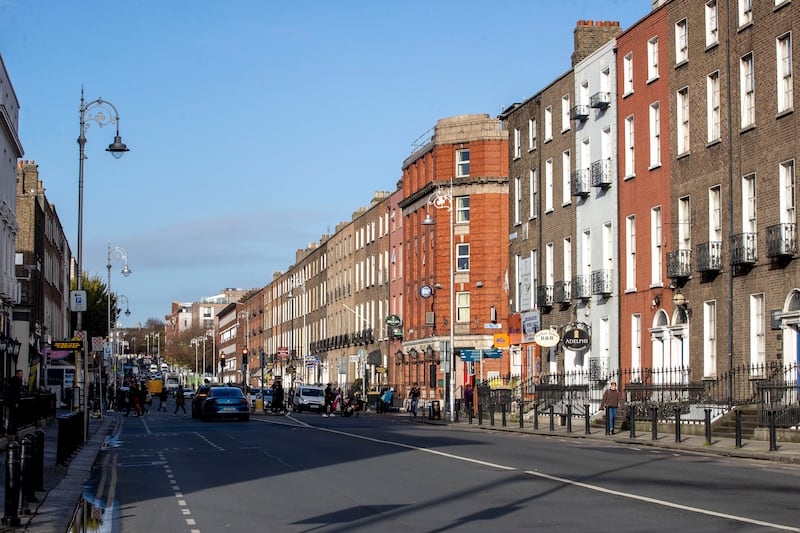
The effects of increasing urban temperatures with climate change will be felt by more vulnerable communities first: people without resources to escape the heat, those in substandard accommodation, the very young and very old, and those with underlying health conditions. Urban greening and tree planting in parts of cities with few or no trees can help all communities there to reduce the risks of climate change and adapt to new conditions.
The EU Nature Restoration Regulation explicitly considers the biodiversity benefits of urban green space and the ability of trees to reduce the magnitude of climate change and help people to adapt to a warmer world. Cooler spots in cities enable other species of plants as well as pollinators, birds and mammals to thrive in our cities.
[ Lucifer effect: hellish heat is the most lethal weather disasterOpens in new window ]
The regulation mandates that there be no net loss of urban green space or tree cover up to 2030, with increases thereafter. As our population expands and urban development increases, this will be a challenge unless it is explicitly planned for.
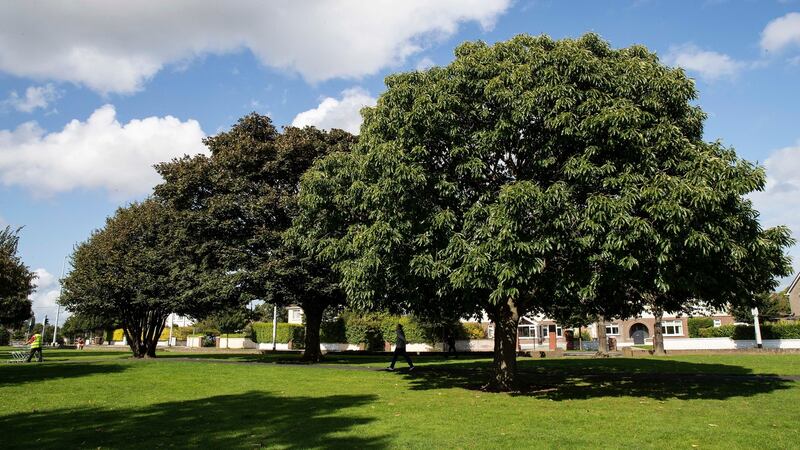
We need to make sure that inner city areas and areas with few trees are not left behind so that all communities can benefit from the cooling effects of trees in their neighbourhoods, not just the leafy suburbs.
Prof Yvonne Buckley is co-director of the Co-Centre for Climate + Biodiversity + Water, and is professor of zoology at Trinity College Dublin


