

Is Dublin back in the UK without telling anyone? Denizens seeking information about the city council’s various meetings and motions could be forgiven for thinking so.
Everyday matters, such as dead fox clean-up and vexatious efforts to get rival election posters removed, still happen in Ireland at dublincity.ie. But at dublin.moderngov.co.uk, the capital’s councillors keep their calendar and agendas.
Overheard’s research suggests that Dublin became independent along with 25 other counties in 1922 after a period of guerrilla warfare. It’s a matter of some sensitivity and strong feeling.
The platform Modern.Gov is provided by Civica, a UK-based “GovTech” company (that’s when a website is for the government). At a basic level, it allows councils, committees, assemblies, panels and boards of all types to keep their materials together and publicly accessible without having to wildly overspend on a preposterously ambitious custom system retrofitted to the habits of a public sector organisation disinclined to major workflow change.
READ MORE


It just comes, out of the box, with a moderngov.co.uk domain. Other councils in Ireland also make use of it, with similar websites for Fingal and Leitrim (whose site has a visible “your custom branding appears to be missing” message). But most stick to .ie.
It’s in widespread use across Britain. At aberdeenshire.moderngov.co.uk, for example, we learned that a councillor is looking to find out what sort of savings the LED lights in Buchan had produced, while Central Bedfordshire (centralbeds.moderngov.co.uk) was getting to grips with a backlog of 8,000 reports of street repairs needed.
Overheard separately asked both Dublin City Council and Civica what was going on with the domain.
They – speaking with one voice on this matter – said: “The standard domain for the service is moderngov.co.uk. The platform itself is centrally hosted by Civica and can be configured to Dublin City Council’s requirements.
“Dublin City Council has worked in partnership with Civica since 2015, using the Modern.Gov platform to provide digital governance and openness and transparency in local government.”
Admirable principles. But Dublin is in Ireland.
Oh Danny boy
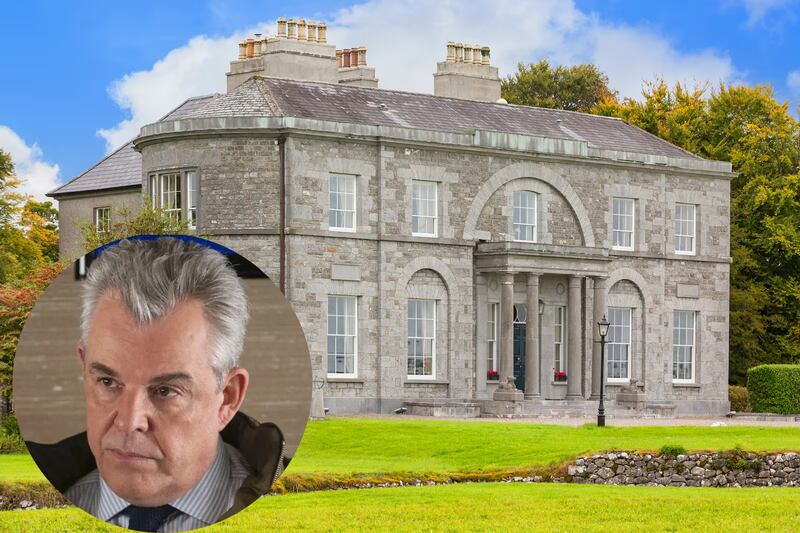
The bright portion of the year is upon us, which means it’s time once again for international film crews to descend on Ireland to take advantage of the stunning scenery and the ambient storytelling ability wafting from the hills like gorse-smoke.
The main character this time is Brad Pitt, who is here for a film based on Tim Winton’s novel The Riders, the plot of which involves his character being in Ireland. Sightings have included a royal wave from the back of a car in two locations – Cork Airport and Ballyadams, Co Laois – but coverage has been plentiful, including from RTÉ.
Less media excitement thus far for costar Danny Huston, but perhaps we’re used to him. Fans of Succession or Yellowstone might have had him pegged as a Yank, but he actually grew up partly in Craughwell, a hurling village in east Galway where his father, director John Huston, took up residence during Hollywood’s McCarthyite purges of the 1950s.
The scene at St Cleran’s Manor was much like any mid-century Irish home: there were “tiger skins and ivory”, “butlers and maids”, he recounted in 2015. Huston said he and sister Anjelica – an alumnus of Kylemore Abbey – had considered buying the place back, it having fallen out of family hands in 1973.
He might have another chance: in a quirk of fate, it’s on the market again right now at just €4.5 million to resume the lordship of the manor.
Court in session

Padel fever is spreading unabated on Dublin’s southside. Despite high land values, enterprising entrepreneurs are applying in large numbers to be allowed to open new courts.
Padel is a version of tennis played in a closed court with a high-tech version of a plastic paddle you might use to swash a ball about on the beach. It is, we are assured by the padel industry, the fastest-growing sport in Ireland, with an estimated 60,000 active players here.
Evidence of its growth is visible in planning permission searches. In the past three years, there have been applications for 13 locations on the southside within Dublin City Council, 10 in Dún Laoghaire-Rathdown, and five in South Dublin County Council. The phenomenon is nationwide – Donegal has two – but it’s particularly dense in the capital’s even-numbered postal districts.
Who’s applying? Anyone who’s anyone – from golf clubs and tennis clubs converting existing space to gyms and well-to-do schools rushing to provide the latest amenity. A number of rugby clubs – Bective, Old Belvedere, Lansdowne and Wanderers – are among them too, as are brownfield developers from Inchicore to Tallaght.
Not every proposal is a win, however. An apartment block on Cork Street in the Liberties in inner-city Dublin had its rooftop court rejected lest it become a “residential development of low-amenity value”.
And St Benildus, a school in Stillorgan on Dublin’s southside where sporting facilities provide for both town and gown, was recently refused because its courts are partly within the “Dublin Eastern Bypass corridor reservation”, a long-forgotten stretch of land once earmarked for a massive Robert Moses-esque urban freeway from the Port Tunnel to Sandyford.
They won’t be bulldozing Blackrock to build the bypass, they’ve since decided, but they might still use the land for other transport options. People need to get to padel somehow.
The Miracle of Adare

Speaking of transport, something unusual has been unfolding in the environs of Adare Manor, where China-like efficiency has been discovered in the process of building infrastructure ahead of the 2027 Ryder Cup.
The Adare bypass is going great guns, with the June 2027 finish date still in sight for the 7km road incorporating 11 bridges and a decent amount of earthwork. Judicial reviews, planning refusals and compulsory purchases have been navigated. The tournament is being held in September 2027, so a children’s hospital-esque delay would be a disaster.
This week it emerged that a temporary train station using a previously mothballed freight line will be opened in Adare village to facilitate fan transportation.
It’s not quite a new train station – Irish Rail sold the station house in 2013 for €216,121, only to buy it back last year for exactly €2 million. And it is temporary.
But it is opening, rather than closing (as was traditional in Ireland 1930-1980) or lying dormant (various since then). The wider revival of the old railway from Limerick to Foynes port is also chugging along, sped up by the early completion of rail bridges.
All good news for the people of east Limerick, west Limerick and all those in between. We’ll call it the Miracle of Adare.
If we could get them to have the Open somewhere near the new wastewater treatment plant, we’ll be up to the European infrastructure average in no time.


