
Main Points
- Price of oil passes $100 a barrel for the first time in two months
- Iran accuses Trump of threatening to carry out war crimes
- Trump puts conditions on Saudi nuclear deal
- EU foreign policy chief Kaja Kallas warns Yemen’s Houthi against targeting oil tankers
Key Reads
- ECB keeps rates on hold amid Middle East turmoil
- Why has the US done a nuclear deal with Saudi Arabia?
- Iran vows ‘eye for an eye’ after Trump threatens to destroy bridges and power plants
US House of Representatives backs legislation to stop further attacks on Iran
The Republican-led US House of Representatives backed legislation on Thursday directing President Donald Trump to halt military action against Iran, the latest symbolic rebuke of the Republican president from Congress.
The vote was 214-208 in favour of the war powers resolution as four Republicans joined Democrats in voting for it.
The resolution, introduced by Representative Pramila Jayapal, a Washington Democrat, directs Trump “to remove the use of United States Armed Forces from hostilities” against Iran unless Congress authorizes it.
However, it was largely symbolic. Lawmakers have passed similar resolutions repeatedly in recent months, but they have not led to cessation of the war.
The four Republicans who voted in favour were Tom Barrett of Michigan, Brian Fitzpatrick of Pennsylvania, Warren Davidson of Ohio and Thomas Massie of Kentucky.
The Senate was due to vote on a separate, but similar, resolution later on Thursday - Reuters
Trump wants of ‘massive attack’ if Iran fails to negotiate
US president Donald Trump told Axios in an interview on Thursday that he is seriously considering restarting major combat operations in Iran, which could include larger strikes than those carried out during “Operation Epic Fury”.
“They haven’t received enough pain yet,” Axios quoted Trump as saying, adding that Trump said he had not yet made a final decision.
“I am considering a massive attack. Bigger than ever before. I am close to making a decision. We are all set for it.”
Trump said Israel “would join in two minutes if I ask them to,” but added that “we don’t need anybody” to launch a new operation against Iran.
He also said there would be “consequences” for Israel joining the strikes, hinting at Iranian retaliation against Israel.
The day so far
Iran flew military personnel and equipment into Yemen
Iran flew Islamic Revolutionary Guard Corps (IRGC) commanders, military advisers and missile- and drone-related equipment into Yemen this month, according to four sources, in a move that suggests Tehran is seeking to strengthen the ability of its Houthi allies to threaten Red Sea shipping.
Four sources familiar with the matter, including two Iranian sources, Yemen’s information minister and a regional security analyst, said Iran transferred the IRGC personnel and military-related equipment on a flight from Tehran to Yemen on July 13th, a development that has not been previously reported.
The two Iranian sources told Reuters that between 10 and 21 IRGC personnel, including senior commanders, were on the Mahan Air flight.
The plane was originally bound for the Houthi-controlled capital Sanaa, but diverted to the Red Sea port city of Hodeidah after the airport came under attack by the Saudi-backed Yemeni government.
“The IRGC commanders travelled there to support Houthi operations and provide training on new missile systems,” one of the sources said, adding that Iran also sent gold on the aircraft to fund Houthi activities.
The two Iranian sources spoke on condition of anonymity because of security concerns.
The deployment offers fresh evidence of Iran’s efforts to bolster the Houthis, who have been in a civil war against the Saudi-backed, internationally recognised Yemeni government for more than a decade and have attacked Gulf neighbours with missiles and drones. – Reuters
Oil rises above $100 a barrel
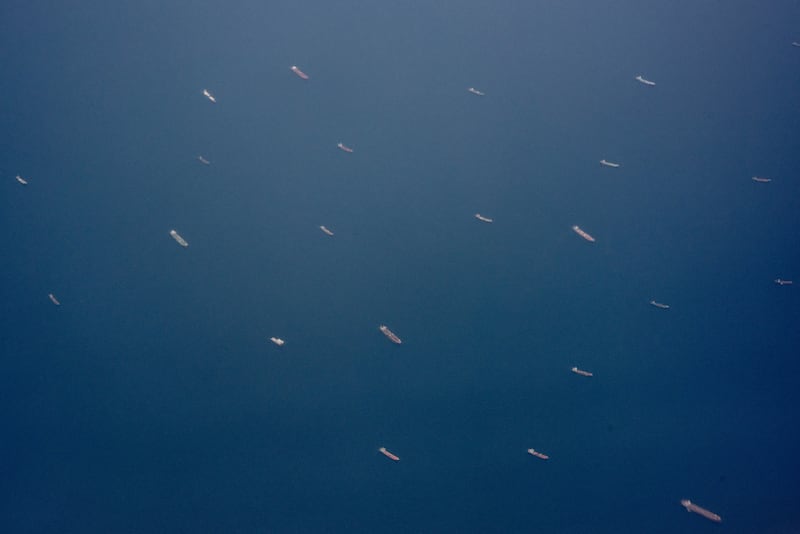
The oil price has climbed back above $100 a barrel for the first time in two months as a fresh escalation of the Middle East conflict threatens to compound disruption to global oil supplies.
The benchmark oil price rose sharply on Thursday, after reaching $95 a barrel the day before amid fears that Yemen’s Houthi militia could strangle Saudi oil exports through the Red Sea while US-Iran tensions over oil flows through the Strait of Hormuz intensify.
The Iranian-aligned Houthis said on Thursday they attacked two Saudi Arabian oil tankers, the Encelia and Layla, accusing the crews of violating a naval blockade imposed by the group in the Red Sea.
The Houthis said they targeted the tankers with a number of ballistic and cruise missiles as well as drones, leaving one of the vessels on fire.
Brent crude, the international benchmark for oil prices, surged past $100 a barrel in March, after the US and Israel launched air strikes on Iran that all but stopped exports of fossil fuels from the Gulf via the strait of Hormuz.
The oil price peaked at $126 a barrel in April during the conflict, but fell back below $100 in late May and had fallen to as low as $71 at the start of July amid hopes of a ceasefire in the region.
The price has started to climb again after the memorandum of understanding between the US and Iran fell apart and fresh hostilities broke out in the Gulf. for the first time in two months, as a fresh escalation of the Middle East conflict threatens to compound disruption to global oil supplies. – The Guardian
Trump puts conditions on Saudi nuclear deal
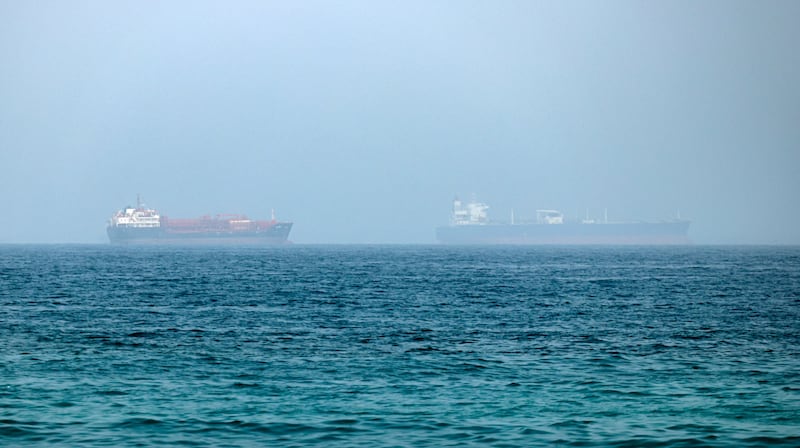
Trump said an agreement being reached with Saudi Arabia for a civilian nuclear programme requires the kingdom to normalise relations with Israel through the Abraham Accords.
In a post on social media, he said the deal does not allow for enrichment of uranium.
Non-proliferation experts have raised concerns that the deal fails to include guardrails to prevent enrichment of uranium to weapons-grade levels.
Trump’s post said the agreement “will be approved, but is totally subject to Saudi Arabia joining the very respected and successful Abraham Accords”.
He added: “The United States is not opposed to Civil (Non-Enriched) Nuclear Facilities.”
The Saudis have made clear that they will not normalise relations with Israel until a pathway for Palestinian statehood is established, and Israeli prime minister Binyamin Netanyahu has made clear that is not in the offing.
Trump has sought to build on the 2020 agreements, which expanded the number of Arab states with diplomatic ties with Israel.
The deal is expected to last 30 years and involve US firms in the programme’s development.
It could allow for the building of a uranium enrichment facility in Saudi Arabia following a joint US-Saudi study.
The agreement is expected to be submitted to Congress for review.
The agreement does not include the International Atomic Energy Agency’s Additional Protocol, which would allow for more monitoring, inspections and verification, according to a second person familiar with the decision.
Price of oil heads towards $100 a barrel
The price of oil surged to almost $99 a barrel on Thursday morning as Iran’s Houthi allies in Yemen claimed strikes overnight on two Saudi tankers in the Red Sea, and neither the United States nor Iran showed any let-up in their fighting.
The Houthis’ strikes were the first since the group announced a blockade on Saudi ships earlier this week. The escalation threatened to broaden the months-long conflict in the Middle East with its potential to create a second choke point for global shipping.
Iran has largely closed the Strait of Hormuz in the Gulf, throttling oil and gas supplies, and rattling energy markets.
Saudi transport authorities said there had been an attack on one ship, the Encelia, adding that the crew was safe, without specifying the origin of the attack. The Saudi government has not commented on the Houthi claim regarding the second ship.
US secretary of state Marco Rubio urged the Houthis to de-escalate, suggesting that the militia had been “snookered” by Iran into joining the war.
Oman said it would co-ordinate between Saudi Arabia and some of the parties in Yemen’s long-simmering civil war, a revival of its long-standing role as a mediator between them.
Nearly five months after the United States and Israel attacked Iran, with the stated goal of thwarting its nuclear ambitions, there was no sign of a diplomatic off-ramp.
Speaking at a conference in Manila, Philippines, after another night of attacks by US and Iranian forces, Rubio said the United States would continue its bombardment until the country’s negotiators were serious about reaching a deal.
“The price will continue to get higher every single night until they come to their senses,” Rubio said, referring to the Iranian leadership.
US Central Command, which co-ordinates military operations in the Middle East, said it had launched another wave of strikes overnight to degrade Iran’s ability to threaten commercial shipping, targeting Iranian drone and missile storage sites and air defences.
At the same time, Iran’s Revolutionary Guard said it had launched attacks on US military targets in Jordan and Kuwait, including a communications tower, accusing US forces of attacking equivalent infrastructure in Iran.
Hours before the latest exchange of fire, Trump threatened to attack a bridge or power plant “any time the Islamic Republic of Iran shoots at a ship in the Strait of Hormuz”, and a week after he said the US would reinstate a naval blockade of Iranian ports.
A ceasefire deal agreement reached last month by the two countries has unravelled in recent weeks, with the Strait of Hormuz as the focal point of the dispute.
The conflict is evolving into a battle to control waterways in the region, which were fully open to marine traffic before the war and are critical to the flow of global oil and gas supplies. – The New York Times
Iran accuses Trump of threatening to carry out war crimes
An Iranian foreign ministry spokesman has accused the US government of intending to “sacrifice whatever remains of international humanitarian law and the foundations of human ethics and civilisation to its insatiable appetite for war and slaughter”.
US president Donald Trump has vowed to target Iranian power plants and bridges if attacks against shipping in the Strait of Hormuz continues.
Esmaeil Baghaei claimed that Washington follows “a policy that calls for the destruction of bridges and power plants, which is manifestly unlawful and criminal”.
“It constitutes reprisal and collective punishment – both of which are explicitly prohibited as war crimes under international humanitarian law.”
He urged military personnel to refuse unlawful orders and said Iran would stand firmly “against lawlessness”.
EU foreign policy chief warns Houthis against targeting oil tankers
Iran’s Houthi allies in Yemen must cease all actions that endanger international shipping and the lives of seafarers, EU foreign policy chief Kaja Kallas said on Thursday.
Recent threats by Yemen’s Houthis to impose a maritime blockade on Saudi Arabia “pose a direct threat to regional stability and constitute a dangerous escalation”, Kallas said in a statement.
The Houthis on Thursday said they struck two Saudi oil tankers as part of a blockade on Saudi Arabia, threatening to create a second chokepoint on global oil supplies alongside the Strait of Hormuz.
Kallas said such attacks were “unacceptable” and inflamed the already fragile situation in the region.
“Navigation must be unimpeded, in the Strait of Hormuz as well as in the Red Sea,” the EU’s top diplomat said.
The EU’s ASPIDES naval operation remained committed to protecting freedom of navigation in the Red Sea and surrounding international waters, she added.
War-hit Dubai offers to pay people to visit
Dubai is offering to pay family and friends of residents to visit in an effort to revive tourist numbers that have plummeted since the city was drawn into the US-Israel war on Iran.
The Dubai Invite scheme, an initiative of the department of economy and tourism, allows residents of the United Arab Emirates to nominate friends and relatives to receive benefits worth more than 3,000 UAE dirham (about €700) for their visit.
Visit Dubai’s website says nominees will receive a “benefits package” including hotel stays, dining deals and attraction tickets.
Eligibility terms state that each resident is eligible for a maximum of three benefit packages for visitors arriving before October 31st, but benefits can be redeemed until December.
The visitors must be non-UAE residents, arrive on a valid tourist visa and can only be nominated once.
The scheme comes as the UAE’s tourism sector experiences a significant downturn, with international passenger numbers falling sharply after the Gulf states became drawn into the US-Israel war on Iran.
In February, Iran retaliated by firing missiles and drones which hit the world-famous Fairmont hotel and Dubai’s international airport, shattering the image the city had sold influencers and the ultra-rich of a gilded playground, safe from the volatility of the wider region.
In 2025, Dubai welcomed nearly 20 million tourists, a record. However, since the conflict the number of airlines operating at Dubai airports has halved as many planes were turned around due to missiles and tourists eschewed routes over the Middle East.
There are reports of massive hotel vacancies and businesses suffering declines in revenue of more than 50 per cent.
The BBC’s senior international investigations correspondent Nawal Al-Maghafi has visited the girls primary school which was destroyed on the first day of the US-Iran war.
The missile strike on the Shajareh Tayyebeh Primary School in Minab killed 156 people including 120 children on February 28th.
Multiple investigations have concluded that the massacre was as a result of a US air strike. The US has so far not admitted responsibility for the attack. Her report is here
Rubio says Iran keeps reneging on deals while ‘paying the price’
US secretary of state Marco Rubio said on Thursday the United States had kept its end of a deal with Iran but Tehran had kept reneging on agreements while suffering tremendous losses.
“These people make deals and then they break it almost immediately or they decide: ‘oh, let’s change the deal’. That’s not how deals work,” he said.
“So now they’re paying the price for it. And maybe they’ll change their mind here over the next few days as they continue to suffer great losses.”

European Central Bank set to pause rate hikes to gauge war risk
The European Central Bank (ECB) will probably keep interest rates on hold on Thursday, buying time to assess the fallout of renewed fighting in the Middle East.
Neither traders nor analysts predict the ECB will deliver a second consecutive hike so soon after last month’s increase.
That means the deposit rate is set to remain at 2.25 per cent, a level officials have described as “appropriate” as they weigh the implications of a re-escalation in the US-Iran conflict.
A ceasefire following the ECB’s June meeting along with weaker-than-expected inflation that month had raised hopes that the worst of the crisis might have passed. But fresh hostilities, pushing oil back above $95 a barrel, have revived expectations for more tightening ahead.
Southeast Asia hosts security gathering amid Middle East turmoil
Top diplomats from Asia, Europe and North America met on Thursday for the security-focused ASEAN Regional Forum, where ministers were expected to call for a peaceful settlement of renewed and intensifying hostilities in the Middle East.
The war in Iran and the blockade of the Strait of Hormuz are set to dominate the Manila, Philippines, meetings attended by US secretary of state Marco Rubio, Russian foreign minister Sergey Lavrov and top officials from Australia, Britain, China, the European Union, India, Japan and others.
The conflict is a key concern for the 11-nation Association of Southeast Asian Nations, which has a combined gross domestic product of about $3.8 trillion heavily reliant on Middle East oil, exposing it to fallout that has stoked global inflation.
“We convene against the backdrop of profound geopolitical and geoeconomic uncertainty,” Maria Theresa Lazaro, the foreign secretary of the Philippines, which is chairing the grouping, said in opening remarks.
“These issues transcend borders and underscore the reality that no nation can address today’s complex security environment alone.”
The US military completed a 12th successive night of attacks on Iran on Wednesday, with Iranian-aligned Houthis claiming hits the following day on two Saudi oil tankers, in a blockade that threatens a second chokehold on global oil supplies in the Red Sea, alongside the Strait of Hormuz.
The world has entered a “new period of turbulence and transformation”, China’s vice-foreign minister, Hua Chunying, told a meeting of officials from ASEAN, China, Japan and South Korea on Thursday, warning of an urgent need for peace and stability.
Message from the Editor

Why has the US done a nuclear deal with Saudi Arabia?
US president Donald Trump went to war with Iran in part to force compliance with two long-standing US demands: Iran must stop enriching nuclear fuel for at least two decades, and it must allow international inspectors to go anywhere and see anything to verify the country is not producing a bomb.
On Wednesday, Trump took the reverse approach to Saudi Arabia, its close ally in the region. To seal a deal for Westinghouse and other American companies to seize a big piece of the business in building two nuclear reactors on Saudi territory – and more to come – it opened the door to allowing the kingdom to begin enriching its own nuclear fuel after two years.
Read more here.
Oil rises as US conflict with Iran deepens
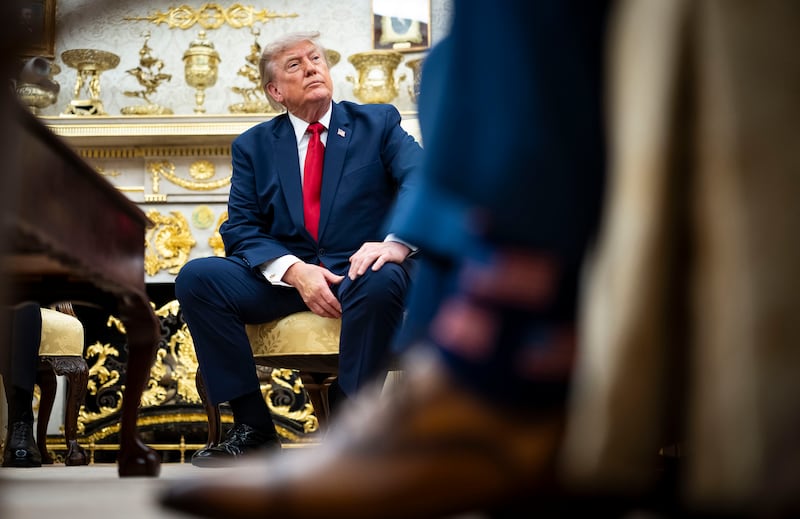
Oil prices continued to rise on Thursday as fighting between the United States and Iran and its allies escalated, adding to fears about shipping energy out of the Middle East.
The Houthis, an Iran-backed militia in Yemen, claimed to have attacked two Saudi oil tankers in the Red Sea after threatening a blockade in the region.
Iran’s Revolutionary Guard said one of three oil tankers trying to pass through a “mined route” south of the Strait of Hormuz caught fire after an explosion, prompting the other two ships to turn back, according to a statement carried by Iran’s official state news agency.
The US it had completed its 12th night of consecutive strikes intended to “degrade Iran’s ability to threaten civilian mariners and commercial vessels.”
The price of Brent crude, the global benchmark for oil, rose nearly 6 per cent to top $96 a barrel. As the fighting in the Middle East has intensified, Brent has gained about $12 over the past week. The cost of crude is up about 33 per cent since the start of the war.
West Texas Intermediate crude, the US benchmark, climbed nearly 2 per cent to $88.45 a barrel.
UK withdraws diplomatic staff from Iran as US air strikes continue
The UK has withdrawn remaining diplomatic staff from Iran as the conflict with the US continued to escalate with a 12th night of air strikes.
A statement on the Foreign Office (FCDO) website said: “Due to the security situation, UK staff have been temporarily withdrawn from Iran.
“Our embassy continues to operate remotely.”
The FCDO advises against all travel to Iran, saying British and dual British-Iranian residents face “significant risk of arrest, questioning or detention”.
A similar move was made in February ahead of the start of US and Israeli combat operations.
US Central Command said late on Wednesday that the 12th night of attacks was designed to “further degrade Iran’s ability to threaten civilian mariners and commercial vessels transiting regional waters”.
Announcing the end of the latest wave of strikes on Thursday morning, it said US forces struck military targets including maritime capabilities, missile and drone storage facilities, coastal surveillance sites and air defence assets.
“The strikes further degrade Iran’s ability to attack civilian mariners and commercial vessels,” it said on X.
Missiles struck near the cities of Ahvaz, Ramshir and Andimeshk in western Iran, according to Iranian state media, who said two people were killed in the town of Shalamcheh on the Iraqi border.
Kuwait’s army said on X that the country’s air defences were “confronting attacks by hostile drones, following the sinful Iranian aggression”.
Iranian foreign minister Seyed Abbas Araghchi also said an “eye-for-an-eye” approach would be adopted by Iran.
“Any aggression against Iran, including our infrastructure, will compel a powerful and decisive response,” he posted on X on Wednesday.
Houthis claim strikes on two Saudi tankers as US attacks on Iran widen
Yemen’s Houthi militia attacked two Saudi Arabian oil tankers, the Iranian-aligned group said on Thursday, with a Saudi news agency later confirming one of the vessels was ablaze in the Red Sea.
The threat of new front opening up in the US-Iran war came as the US military launched its 12th successive night of strikes, which have now widened to western and central Iran.
The Houthis said they attacked two tankers, the Encelia and Layla, saying the vessels had violated a naval blockade imposed by the group on Saudi Arabia in the Red Sea. The Houthis said they targeted the tankers with a number of ballistic and cruise missiles as well as drones.
Saudi Arabian news outlet SPA said an attack caused a fire on the bow of the Encelia but all crew members were safe. It did not say who targeted the vessel.
A maritime security source said earlier on Thursday that the Encelia had transmitted a distress call via VHF radio, reporting it had been struck by a missile while operating at the outer port limits of Saudi Arabia’s Jizan, in the Red Sea, and was on fire.
The British maritime risk-management group Vanguard also said the Saudi-flagged tanker Encelia was struck by an unknown projectile about 70 nautical miles (130km) southwest of Saudi Arabia’s Al Shuqaiq.
The United Kingdom Maritime Trade Operations agency said it had received a report of an incident in the same area, saying the master of a tanker reported being struck by an unknown projectile that caused a fire on-board.
It was not immediately clear whether the UKMTO report referred to the Encelia, though details matched Vanguard’s report.
In the statement announcing their attack on the two tankers, the Houthis claimed they had forced about 10 ships to retreat and return.
Five tankers changed course in the Red Sea on Wednesday, with two signalling the Suez Canal as their new destination after the Houthis warned ships to avoid Saudi ports, ship-tracking data showed.
Brent crude oil on Wednesday jumped more than 3 per cent to move back up above $95.
Before the Red Sea flare-up, US president Donald Trump had vowed to destroy an Iranian bridge or power plant every time Iran shoots at a ship in the strait of Hormuz, a claim Iran said it would respond to.
US attacks on Thursday lasted five hours and struck at Iranian military targets including maritime capabilities, missile and drone storage facilities, coastal surveillance sites and air defence assets.
Iranian media reports said the US twice on Thursday attacked a military target in Bushehr, near the country’s only operating commercial nuclear power reactor, marking three strikes there in two days.
State TV reported two people were killed and 11 wounded in what a Khuzestan provincial official described as a US missile attack on the Shalamcheh border crossing with Iraq.
Despite triumphant statements from Washington, Iran has demonstrated it retains missile and drone capabilities. Iran pounded vital water desalination and energy plants in Kuwait this week and targeted US military assets there. US allies Bahrain and Jordan have also come under attack in recent days.
An Iranian health ministry official said 53 civilians had been killed and 592 wounded since late last month. Since the US and Israel launched the war on February 28th, thousands of people have been killed and millions displaced.
The war has also led to the deaths of 18 US service members and injured more than 450 troops.
Trump attended a ceremony on Wednesday at Dover air force base, Delaware, for four US service members killed in Iranian attacks on military bases over the last few days.
“For me it’s one of the hardest things to do as a president. But it has to be done,” Trump said before leaving for the ceremony.


