

Like nooses, the concentric circles of Labour MPs who admit they want Keir Starmer gone get smaller and smaller, each getting closer to their leader as he flails in the centre. Soon he may struggle to breathe.
This week the UK prime minister is – not for the first time – fighting for his political life. This is his toughest challenge yet. Starmer was due to dig his heels in at a London reset speech this morning, but the drumbeat of Labour grumblings only gets louder.
Initially, in the immediate aftermath of last Thursday’s disastrous (for Labour) elections, it was the usual suspects who called for Starmer to quit – the sort of recalcitrant, recidivist Starmer critics whom his allies could easily dismiss as the awkward squad.
The first group included the likes of Norwich South MP Clive Lewis, a committed Corbynite who was suspended last year for rebelling on welfare cuts. As far back as last September he was saying Starmer wasn’t “up to the job”. By November he was calling for him to be replaced by the Greater Manchester mayor Andy Burnham.
READ MORE


Last week, as the tears were still rolling down the cheeks of the massed ranks of Labour’s defeated, Lewis said Starmer needed to set out a timetable for his exit and the longer it was delayed, the worse it would be for Labour and Britain.
In Starmer’s world, a Lewis concentric circle is a vast one. But as last Friday wore on and the counting centres turned into Labour graveyards, the diameter of those circles began to narrow. John McDonnell, who was shadow chancellor under Jeremy Corbyn, the regime that was vanquished by Starmer, said the Labour leader needed to put his party and country first and ask himself if he was capable of beating Nigel Farage.
The outer howls of recrimination kept coming in, one by one, drip by astringent drip. Ian Lavery warned Starmer could “end the party forever”. Simon Opher, a doctor before he became a MP, made a devastating diagnosis of Starmer’s value as leader: “If we go into the next election with him, we are going to get slaughtered.”
Next up was Louise Haigh of Sheffield Heeley. She is seen as one of Labour’s most capable MPs but, as a sacked former cabinet minister, also no friend of Starmer’s. It is believed Haigh is now an outrider for Burnham, the politician that many Labour MPs want to return to Westminster to oust the prime minister. As leader of the Tribune grouping of soft-left Labour MPs, she wields significant influence.
The circles narrowed further and the series of complaints began to resemble an organised campaign to pressure Starmer to quit.
Cabinet members and Starmer’s main rivals kept their counsel but then Catherine West, a sacked former foreign office minister, lobbed in a hand grenade that scorched the Burnham script. She warned that if someone more senior didn’t challenge Starmer by Monday, she would try to spark a leadership campaign herself.
Instead it sparked panic among Burnham’s allies, who feared West would set off a leadership contest too early while he was still marooned in Manchester, unable to take part because he has yet to find a way of getting back to parliament – a byelection – as a MP. They have tried to rein her in.
Then former Starmer loyalists joined in, the concentric circles of dissent shrinking ever further. Josh Simons, who used to run the Starmer-factory think tank Labour Together, said the prime minister had “lost the country”.
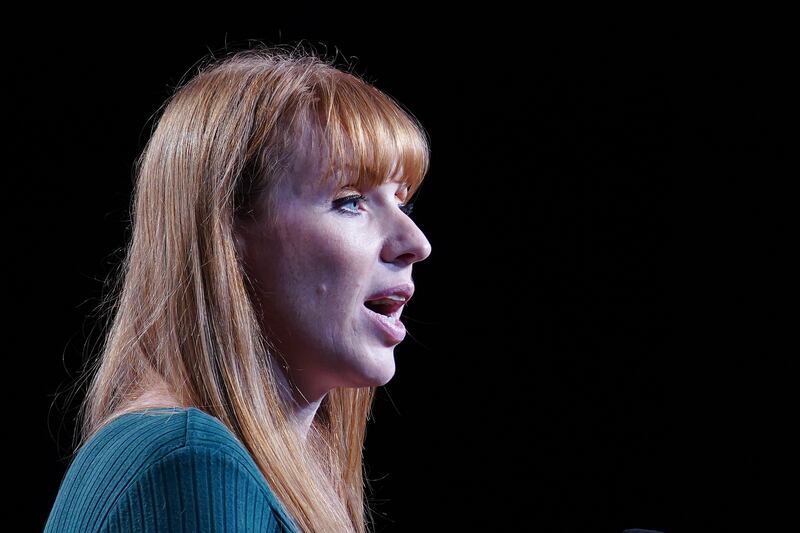
Then Angela Rayner, the former deputy prime minister and oft-touted leadership contender, suggested Starmer was on his “last chance” and he shouldn’t block Burnham from coming back to parliament. That was tantamount to saying Burnham should replace Starmer, because everybody knows that’s what the Manchester mayor’s putative return would be all about.
So now, whether Rayner is actually in the pro-Burnham camp or she just wants everyone on the Labour soft-left to think she is, knowing this might all be over before Burnham gets a chance to return to parliament, the succession game heats up.
Then a serving minister, Miatta Fahnbulleh, retweeted Rayner’s statement. Of all the circles of dissent, in its own understated way, this might be the tightest, narrowest and most difficult for Starmer so far: serving ministers are duty-bound not to criticise the government. Fahnbulleh’s intervention could be viewed as a direct challenge.
Does Starmer have the political capital to admonish her for it at the moment? Maybe, maybe not. Can he afford not to, as his dwindling authority circles the drain? Up to 40 Labour MPs have called on him to go.
Starmer will attempt a fightback on Monday with a speech, the centrepiece of which is a pledge to get closer to the European Union. “A day late and a dollar short,” said one seasoned observer of the Westminster scene.

If West’s intervention fails, the prime minister’s position might be safe for now. If it sparks a contest, he is probably toast – one or more of Rayner, Ed Miliband, Wes Streeting or other cabinet members would weigh in, before Burnham could take part.
If cabinet members or ministers start resigning, then Starmer is also probably finished. That was how the end of Boris Johnson’s time at Number 10 was hastened.
It is also possible that Starmer limps on, for now. Until the summer? Perhaps. Until the next crisis? He seems to be running out of room for manoeuvre. Those circles of dissent keep shrinking, cramping his space.