Winters in Ithaca, in upstate New York, are infamously grey-skied and excruciatingly bitter, so students at Cornell learn to make the best of the late autumn colour. But this term, the bleakness has arrived early.
On Thursday night, more than 100 people, most of them students, attended a public hearing arranged by Cornell University’s student government. The attendance, out of a student body exceeding 25,000, was small but the subject matter, and the emotional charge, carried weight.
There were, according to reporting, raw testimonies and tears and repeated calls for a better response from the college leadership in guiding the institution through the fallout from a sexual assault case that has convulsed a certain stratosphere of United States society.
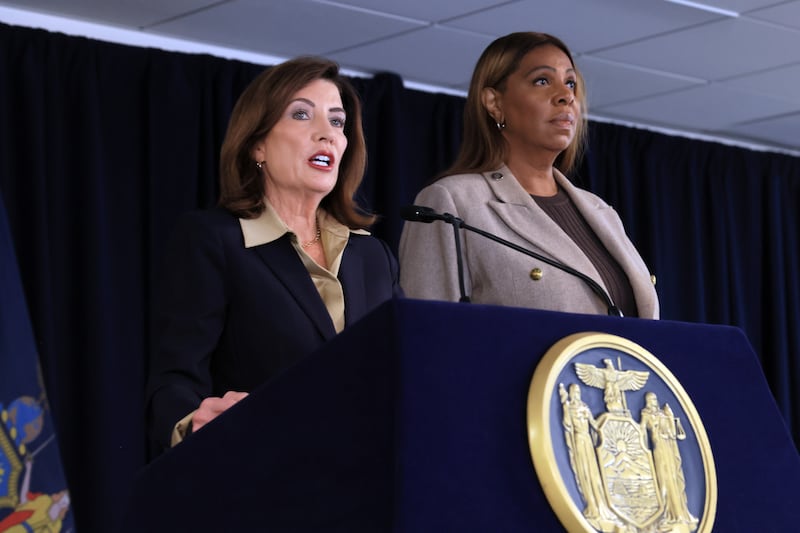
By then, governor of New York Kathy Hochel had tasked New York attorney general Letitia James, nemesis of Donald Trump, to lead a new investigation into the case that has been reopened following the filing of a lawsuit by a former Cornell student referred to as Jane Doe.
READ MORE


The woman is taking a legal action against seven members of the Chi Phi fraternity house, and Cornell University, claiming that she was drugged and gang-raped at a fraternity party on the campus two years ago.
She initially reported the alleged assault on November 14th, 2024, explaining that what began as a consensual sexual encounter with a man, who suggested another male join them, gradually led to a situation where she was unclothed, intoxicated, having taken ketamine, and surrounded by a “ring of men”. “I don’t remember the very end of the event where I was raped,” she said over the course of a detailed conversation with a campus police officer. “I can say with 100 per cent confidence I was raped.”
While the details of the events were included in the condensed voluntary statement forwarded to the district attorney, the woman’s assertion that she had been raped was not included, something that Hochel identified when she spoke on Friday morning.
“We don’t know enough. But what is coming out is very contradictory and I want the truth.”
Cornell’s response at the time of original complaint was to mete out punishments, which included two suspensions and two expulsions. The seven defendants deny the charges they are facing.
In the curiously loose way of the American legal system, the details of the night in question, and its repercussions, are already under a furious firestorm of argument, point and counterpoint, in both the social media sphere and dominating media and political discourse. The disturbing details, including degrading, misogynistic messages traded between members of the fraternity house, have been pored over. So too has the plaintiff’s testimony. Although the identities of those involved have been officially withheld, their names have been published online and elsewhere.
The scandal has raised broader questions about consent; about prevailing sexual mores among young men raised in a culture where the pornification of women is rampant; about the safety of women on campuses; and about the subculture of the US collegiate fraternity house tradition, which is as old as the country itself. Just last week, a Wisconsin university launched an investigation into an “unregistered” frat house in which 30 male students were found shirtless and sitting in squalor in the hot basement, undergoing a prolonged hazing test.
The plaintiff’s lawyer gave a television interview on Friday in which he asserted his client had arrived at the frat house that night too intoxicated to give consent to anything.
“Testimony was she was slurring her words before she even got to the Chi Phi House, that she was stumbling around. I think most people, particularly a bunch of college, a bunch of frat boys, know when somebody is intoxicated.”
In late summer, The Princeton Review published a list of those US colleges whose academic year fees will now exceed $100,000 (€88,000). Harvey Mudd College came in at number one, with everywhere from Duke to the University of Southern California to appearing. Cornell is notionally in the same full-fees bracket although it offers significant public-tuition programmes, unlike other elite colleges – although students with excellent academic achievements are often accepted by those elite colleges irrespective of financial status.
[ How Cornell University alleged rape victim went from shame to seeking justiceOpens in new window ]
For centuries, attending US elite universities was a badge of distinction, a signifier of the class system, and a perceived golden ticket into the slipstream of elite professional and public opportunity and society. Almost four million Americans will graduate high school next spring. There are just 165,000 Ivy League places on offer each year. Today’s generation are arriving in campuses at a time when the fees are more exorbitant than ever while the traditional pathway careers in finance or law are no longer as easily navigated or as certain.
And the disturbing accounts and testimonies of campus life emanating from the Cornell revelations suggest that merely navigating a path through their college years is more challenging, and in some cases, troubling than ever before.