The improved pay offer to public sector unions was “very, very fair”, the Taoiseach has said as discussions continue to resolve the ongoing pay dispute.
Micheál Martin said the offer on the table “meets all the criteria” flagged in earlier talks.
Speaking at the at the opening of the Dromineer Water Sports Facility in Lough Derg, Co Tipperary, on Monday, Martin said the offer was “very substantially improved”.
“It meets all the criteria that was identified earlier on in respect of the needs of a resolution of the issues,” he said.
READ MORE


“The Government wants a national pay agreement. We have expanded the public service over the last number of years.
“We want to be in a position in the future to have a sustainable budget that would enable us to continue to recruit teachers, nurses and special needs assistants and many more public service gardaí.
“To be able to do that you do have to have a sustainable budget and there is always a balance between day services and future development.”
The unions have been offered increases of 10.5 per cent in a new pay deal that would run until the early months of 2029.
It is understood that headline rate would be significantly exceeded by pay increases for lower-earning public and civil servants, some of whom would benefit from wage increases of up to 17.8 per cent over the lifespan of the proposed deal.
There would be an additional back payment of €1,200 or 2 per cent, whichever is higher, in 2026 for workers, which would bring pay increases for 2026 to 4 per cent overall.
Earlier, Tánaiste Simon Harris said the coming hours would be “crucial” in the negotiations to find a “landing zone” that averted a disruptive strike on Thursday.
The Government’s offer was a “substantial” improvement on what had been on the table beforehand, the Minister for Finance said.
There will be a push to lock in a deal to prevent the planned nationwide strike, which would close schools for the day and disrupt other public services.
The industrial action would also coincide with a big summit of European leaders taking place in the Convention Centre in Dublin, as part of Ireland’s EU presidency.
“I don’t want to say anything that’s provocative or escalatory when I’m asking others to de-escalate, but what I would say is the Government has made a significant move by any fair objective, it is a significantly improved offer from the perspective of the unions and their members,” Harris said on Monday morning.
The Fine Gael leader said there was “a very small but crucial window to try to de-escalate the situation” and to head off the disruption of a second strike on Thursday.
Sources said the pay offer would in real terms be worth 11 per cent cumulatively. It includes an element covering local bargaining.
Late on Sunday, there was unhappiness in the union camp after details of the pay offer were reported in The Irish Times and elsewhere, with senior officials of the view that the Coalition was trying to undermine them.
It is understood the union representatives had resolved to give “one more attempt” on Monday to get the Coalition to improve on its offer.
Harris, who was speaking in Brussels before attending a meeting of EU finance ministers, said: “There needs to be more effort put in today to try to find a resolution than plan a strike.”
He said the Coalition’s ability to offer income tax cuts in the recent budget and now increases in public sector wages was in stark contrast to many other European governments, who were short on money and facing “extraordinarily difficult” economic decisions.
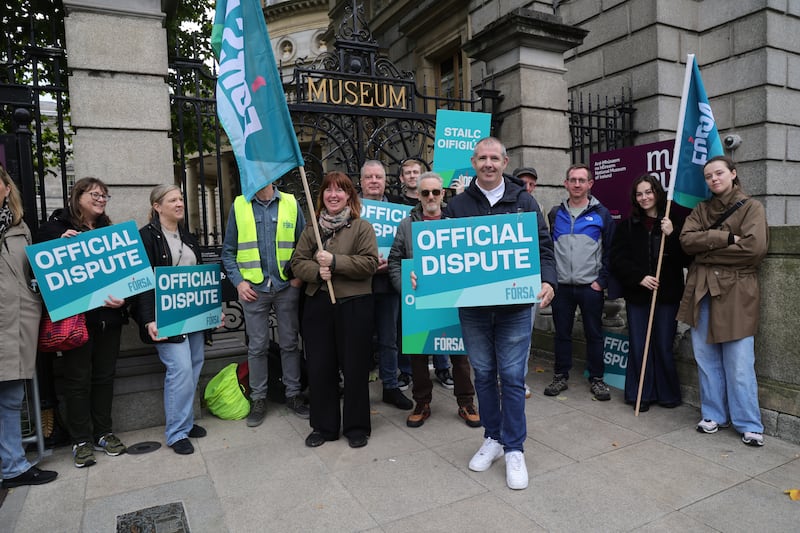
Unions are still making preparations for the strikes. In a note to members on Sunday, Kevin Callinan of Fórsa, the union with the highest number of members involved in the dispute, said talks were “very difficult”.
He told his membership that preparations were “well under way” for the stoppage and associated rallies.
It comes as Dublin is already bracing for security threats and large-scale disruption for commuters and businesses with world leaders due to meet this week in the capital for the biggest event of Ireland’s EU presidency.
After a range of bomb threats to media outlets in Ireland and airlines in Europe, Garda and Defence Forces have been planning for significant disruption. On Sunday, Harris said the events of last week suggested there were “bad external actors at play here”.
Garda sources told The Irish Times it was unlikely the EU presidency events of the coming week would pass off without incident, especially the meetings on Thursday and Friday, when up to 50 heads of state will be present.
There is significant disappointment, and annoyance, in Garda Headquarters that the work-to-rule this week could not be halted. – Additional reporting: PA