
Things didn’t go to plan when Friedrich Merz invited a group of children to visit him this week in the Berlin chancellery.
With cameras rolling, instead of soft questions, 11-year-old Anna asked him: “Do you not find it a shame that you are so unpopular?”
The 71-year-old chancellor braced himself, then delivered an oracle-like answer: “If you only want to be popular in politics, then you are not doing everything right.”
Popularity is unlikely to be a burden for Merz in office, where he enjoys a record approval rating of just 11 per cent. After just 18 months, the question not even his child visitors dared ask is: how did things go so wrong so quickly?
READ MORE


When Merz led his centre-right Christian Democratic Union (CDU) back to power in February in 2025 it was political comeback. But it was also a personal comeback for Merz, a quarter century after his ambitions were thwarted by the later chancellor, Angela Merkel.
But the shadow of her political legacy, and dramatic shifts since she departed office in 2021, created a hefty burden for her party. Back in office with the centre-left Social Democratic Party (SPD), Merz inherited unprecedented security, energy and economic challenges. On top of that, his administration is tackling a major reform backlog while struggling to find a German economic model for the future.
Those in the chancellor’s inner circle are hopeful that, after an eventful 18 months in office and seven years of near-flat growth, the tide is turning thanks to a rising growth forecast of 1.3 per cent this year.
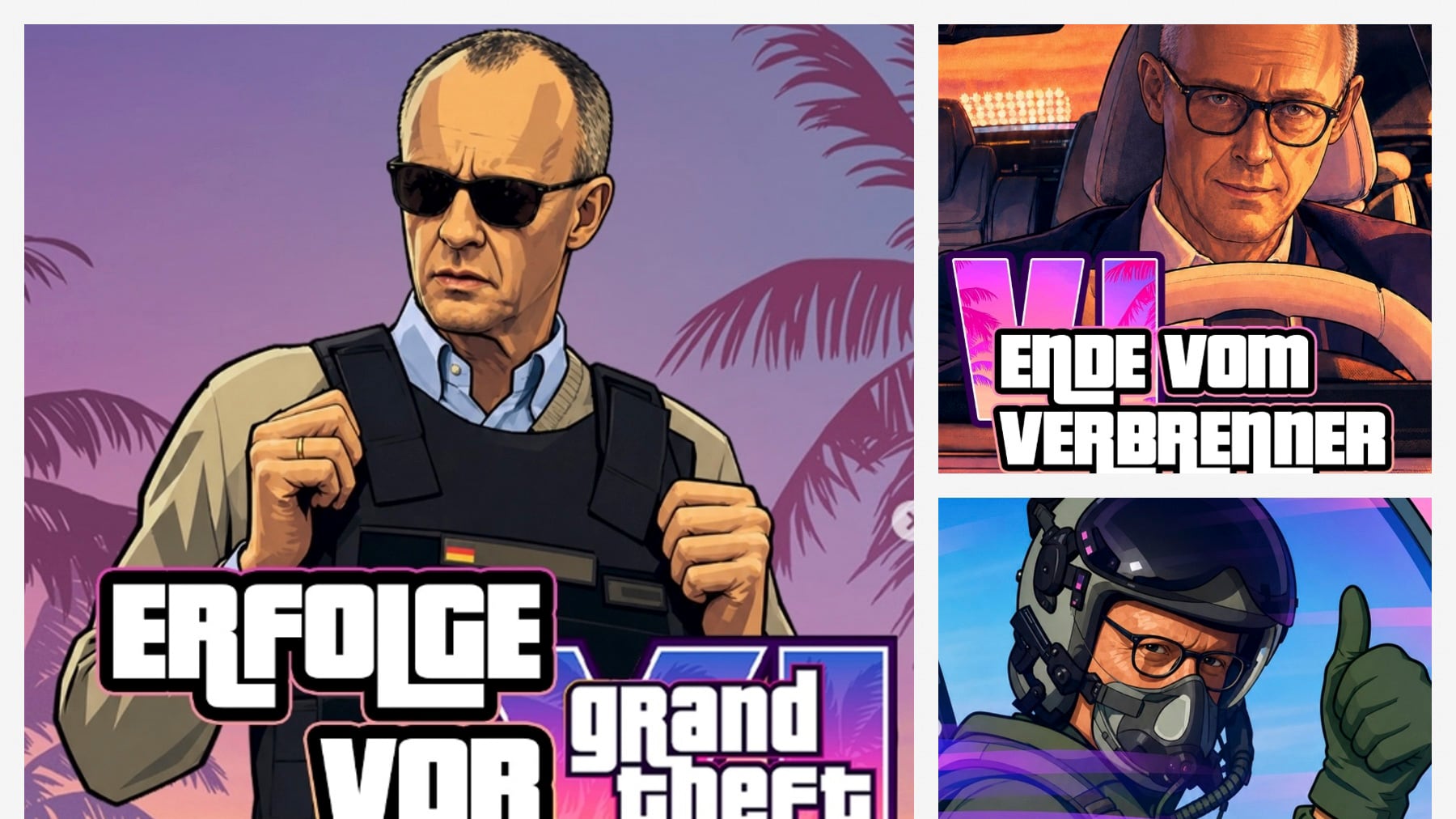
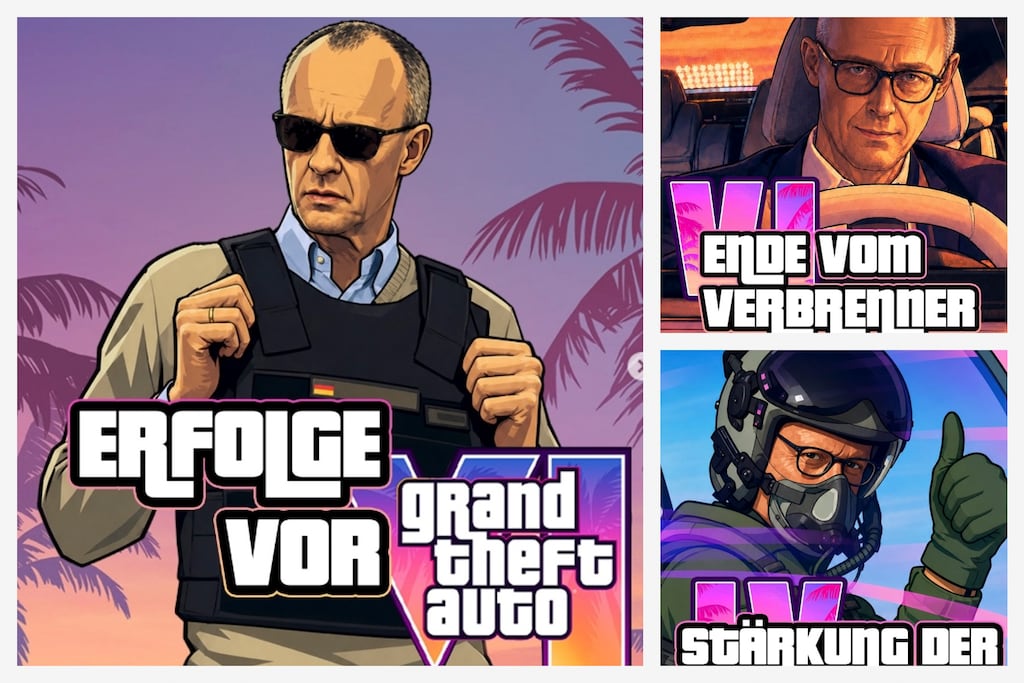
With that in mind, CDU social-media managers posted on Instagram images of Merz in a Grand Theft Auto aesthetic. Their political message – alongside a cartoon Merz in a high-vis vest or as a fighter jet pilot – was about promises kept, from boosting the armed forces to tighter border controls.
Despite widespread groans, the post was getting plenty of attention until a German car rental company, notorious for its satirical images, took those images of Merz and added a bulletproof vest.
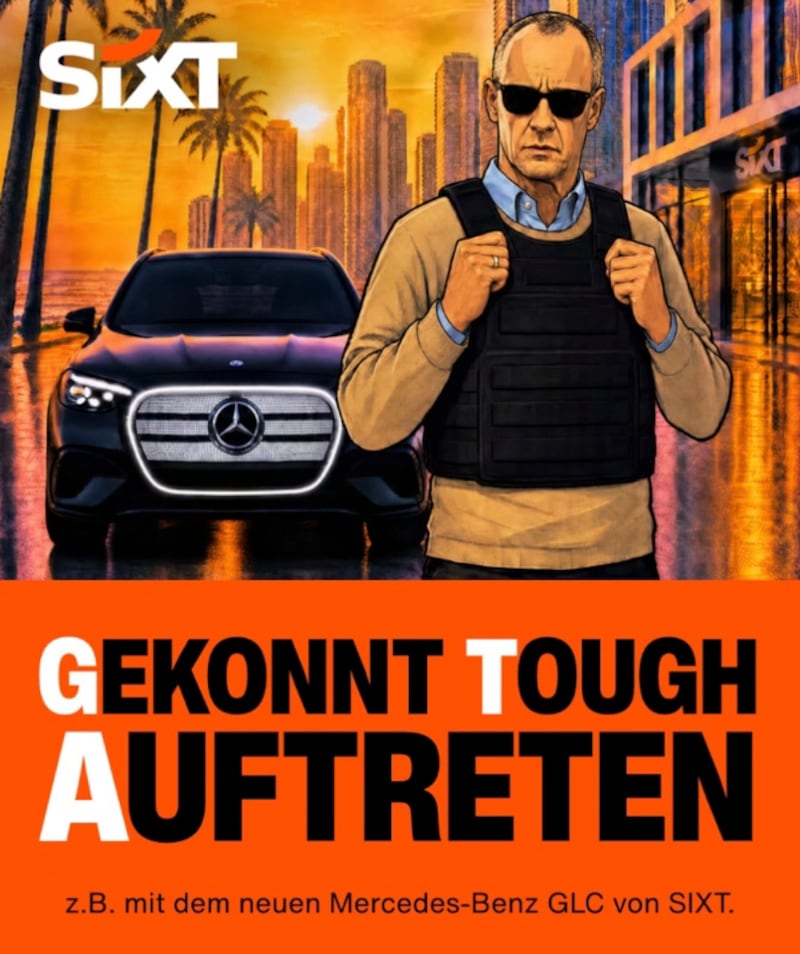
It was a bitter commentary on a man who, even his inner circle acknowledge, has a rare talent for making a bad situation worse.
The last weeks are littered with examples of Merz handiwork. Amid endless coalition rows are frequent flip-flops, most often over taxes: on alcohol, plastics, sugar. Each day brings a new twist, a temporary solution or confusing compromise.
When a recent late-night coalition meeting over energy taxes dragged on until near midnight, Merz stood up, reportedly left the room for his scarf and bag, then returned to comment: “I’m not doing this any more.”
Eventually he stayed, and a sticking plaster solution was found, but moments like this reveal, analysts say, a lack of basic political skills for organising majorities and finding compromises.
“He came to power after 20 years away from politics,” said Prof Frank Decker, political scientist at the University of Bonn, “and he lacks the skills and experience that make for good leadership.”
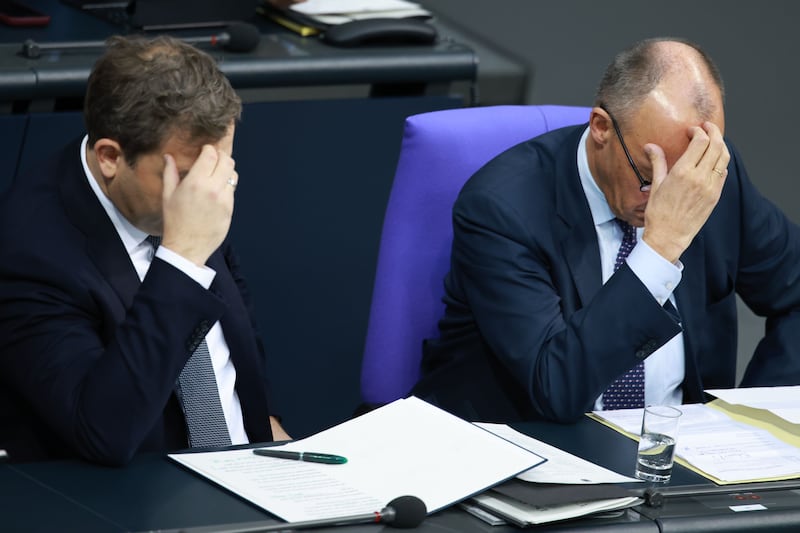
Merz is the first German chancellor to never hold a ministerial office and, increasingly, not even his close aides try to finesse that fact.
Take Thorsten Frei, an amenable former Merz chief-of-staff and now the CDU’s Bundestag floor leader. At an event he attended last week in Munich, political scientist Ursula Münch was shocked by his openness.
“Frei admitted openly they simply didn’t – and still don’t – have enough executive experience,” said Prof Münch, director of the Academy for Political Education in Tutzing, Bavaria. “Frei is a nice person but not very assertive. Merz simply doesn’t have the right people around him.”
[ ‘Russia wants more than Ukraine,’ Germany’s Merz warnsOpens in new window ]
That is one reason the mood towards Merz is darkening in the CDU parliamentary party. The most recent poll saw support slide to a disastrous 19 per cent, nearly 10 points down on the February 2025 election and almost 10 points behind the far-right Alternative for Germany (AfD). A snap election would see many CDU parliamentarians lose their jobs, compounding a mutinous mood in Bundestag meetings.
Another striking source of rancour is among those who helped secure Merz’s political comeback: CDU grandees in party heartlands like Baden-Württemberg, in Germany’s southwest.
After years feeling lost under the centrist Merkel, they backed Merz as a conservative candidate on a dual ticket: law and order and fiscal discipline.
The latter went out the window when, after the February 2025 election win and before his May swearing-in, Merz backed the very thing he denounced on the campaign trail: an unprecedented debt-financed investment programme for infrastructure, defence and security spending.
The Merz explanation for his U-turn – that the new parliament’s opposition could block such crucial spending – convinced few in Baden-Württemberg.
They feel had that this was no one-off and that, in their eyes, the Merz coalition has developed a dangerous appetite for debt. Some 22 per cent of this week’s federal budget was financed with borrowed money. Add in additional off-balance sheet borrowing for infrastructure and defence, and that share jumps to 37 per cent.
For CDU fiscal conservatives, who view borrowing as the devil’s work, the man they backed is now a political Antichrist.
“We fought like lions – three times – for Merz to become party chairman,” said Wolfgang Reinhart, a local CDU grandee and former state parliamentary party leader in Baden-Württemberg. “Before, 75 per cent of members here backed him and 25 per cent were opposed, now it’s the other way around.”
Amid the hail of criticism, there are some who have warm words for Merz – at least some of the time – such as his steady line on European security and on Ukraine.

“Merz is bad at politics but good at foreign policy – he gets the fundamental threats this republic is exposed to,” said Thomas Kleine-Brockhoff, director of the German Council on Foreign Relations (DGAP).
But even he sees the chancellor as a master at self-inflicted “unforced errors”: announcing breakthroughs that aren’t, then chasing runaway negative headlines.
And this negative domestic narrative is starting to seep into foreign policy, he suggests, with German public support for Ukraine military assistance dwindling below 50 per cent for the first time. Kleine-Brockhoff’s theory: voters are starting to make connections between spending cuts at home and bumper security spending. For the DGAP director, this all bodes ill for Germany and Europe in the period ahead.
“Vladimir Putin is betting on a window of opportunity, between the possible election of a populist French president and the departure of Donald Trump,” he said. “The question is, given all his domestic difficulties, whether the chancellor and this country have the strategic capacity needed to manage the looming 18 months of extraordinary danger.”
The most likely scenario for now is that Merz will limp on – at least until a May state election in the powerful state of North Rhine-Westphalia. A poor CDU result there, or in four other state polls next year – could see pressure build for a change at the top.
“But Friedrich Merz cannot be toppled as chancellor, the German system doesn’t allow for that,” said Münch. “He can only be pushed to resign.”
And that is the final irony of Merz in office. As Germany’s favourite whipping boy, potential successors are not lining up. Or, to extend the GTA metaphor: if Merz’s job were a car, no one in Germany wants to steal it.